
Why Old Car Models Dominate Uganda’s Rental Market
February 26, 2026
Uganda Car Hire: Can You Pick Up Earlier Without Extra Fees
March 19, 2026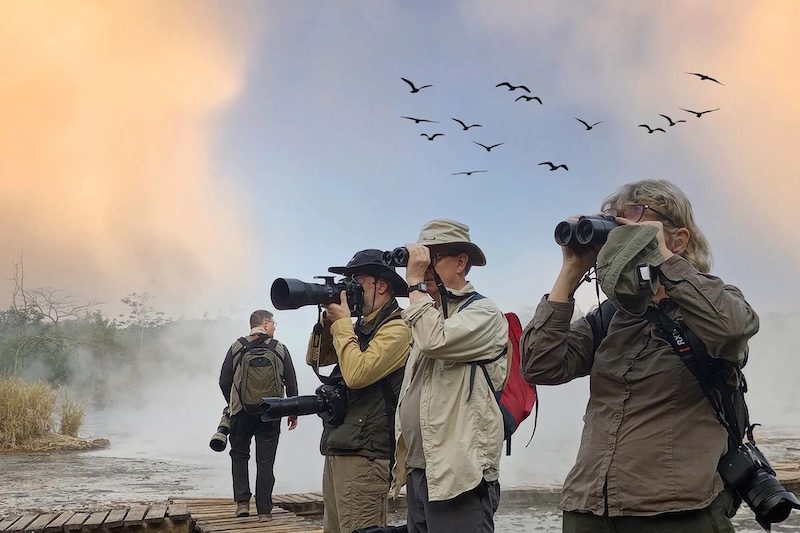
If you’re planning a birding adventure in Uganda, this guide has been created specifically for travellers who enjoy the freedom of self-driving or independent traveling while also appreciating the value of expert guidance at key locations within National Parks. In many of these protected areas, having a wildlife authority escort is mandatory for safety reasons anyway. Exploring independently often brings a deeper sense of achievement, while guided excursions typically increase your species count and offer valuable learning opportunities, especially in tropical forests where recognising bird calls is essential. There’s nothing quite like picking up tips from local guides who have an intimate knowledge of the sounds.
The Shoebill, together with the Green-breasted Pitta and Grauer’s Broadbill, ranks among the most coveted bird species in Uganda. Mabamba Swamp has earned its reputation as the premier location to observe this remarkable bird.
Best Times for Your Trip
Navigating Uganda becomes simpler during the dry seasons, when birds also tend to be more visible and vocal. Being situated on the equator, Uganda experiences a tropical wet climate. This means rainfall can occur throughout the year, though most regions have two distinct rainy periods: March through May, and September through December, with November seeing the heaviest precipitation in the latter period. The northern region, typically drier, has a single wet season running from March to October.
The summer months in the northern hemisphere, which suit many travellers’ schedules, fall within one of the drier windows and are consequently considered peak tourist season. This period provides excellent birding opportunities and coincides with Grauer’s Broadbills establishing their territories. January and February bring an added attraction in the form of Palaearctic migrants. What’s less commonly known is the significant movement of intra-African migrants during this time, with substantial flocks funnelling through the rift valleys alongside the overwintering birds. Bear in mind that Green-breasted Pittas become notably harder to spot during these months.
Arriving in Uganda
For foreign travellers, flying from any international airport via Nairobi with Kenya Airways presents a popular choice. On return journeys, International Airlines flights from Nairobi to your home countries allow luggage to be checked through directly from Entebbe to your country’s airport. If you’re simply transiting through Nairobi, a Ugandan visa suffices rather than the pricier East African visa option. The e-visa system processes applications within a few days typically, though submitting your application well ahead of travel helps avoid any last-minute complications.
Alternative routing through Dubai, Doha or Cairo offers cheaper fares at the expense of longer journey times. Those heading to southwestern Uganda might find it more convenient to fly into Kigali with RwandAir, which operates direct flights from different popular international airports, as you’ll be closer to your destination. This route requires an East African visa. Border formalities proceed smoothly even with a rental vehicle, and regular bus services connect Kigali to Kabale in Uganda.
Getting About by Road
For self-drive arrangements, a Toyota Rav4 can be hired without a driver through Car Rental Uganda Entebbe at approximately US$45 daily. WhatsApp serves as the primary communication tool throughout Uganda, making pick-up and drop-off coordination straightforward. Ashley serves as the main contact there, handling vehicle deliveries to and collections from guesthouses in Entebbe. Travellers consistently report positive experiences with these well-maintained, fully insured vehicles that reliably reach all intended destinations.
While driving in East Africa might seem intimidating initially, most visitors find it surprisingly manageable. Driving standards across Uganda have shown marked improvement over the years, though the roads approaching Kampala remain somewhat chaotic with heavy traffic. Finding fuel presents no difficulty, with filling stations everywhere and attendants happy to serve you.
Police checkpoints are commonplace, but officers rarely request payments from tourists. Speed bumps pose the main hazard, appearing frequently, while overtaking sluggish lorries becomes a necessary skill. Most major roads now feature crawler lanes. Night driving should definitely be avoided, not only because of occasional carjackings but primarily due to vehicles with non-functioning lights and the presence of pedestrians and cyclists. Those who have attempted night driving describe it as intensely stressful.
Larger parties can arrange minibuses with drivers for journeys to Kabale. These drivers typically cover their own accommodation costs, though tourists sometimes offer to pay as a courtesy when wanting an especially early start. Bus services connecting Mbarara and Kampala run frequently, operate affordably, and have significantly improved safety records, though taller passengers may find the seating cramped. They nevertheless offer greater comfort and speed than the ubiquitous share taxis. Motorcycle taxis, known as Boda Bodas, provide an option favoured by some travellers despite being quite hazardous, particularly in urban settings. Uber has also established itself in Uganda, offering convenient urban transportation.
Communications, Spending and Currency
Purchasing a local SIM card with a data bundle proves straightforward at the airport or Victoria Mall in Entebbe. Allow around thirty minutes for registration formalities. Both Airtel and MTN offer comparable services. Once equipped with data, Google Maps serves admirably for navigation. Mobile coverage across Uganda matches or exceeds UK standards, with 4G available throughout most built-up areas. Internet connectivity relies on mobile networks in most locations, resulting in somewhat slower speeds.
Although larger hotels and all national parks accept credit cards, cash remains the standard payment method. US dollars or Uganda Shillings both work, though dollars attract less favourable exchange rates. Carrying some higher denomination dollar notes proves useful for major expenses, reducing the need for large cash amounts and frequent ATM visits. Notes should be pristine and recent, as banks reject worn or old currency.
Mobile money transfers have become universal across East Africa, with MTN’s MoMo leading in Uganda, though M-Pesa also features prominently. This system offers considerable convenience for transactions once you’ve mastered its use.
Your choice of transport and accommodation naturally depends on budget considerations. While some travellers have previously explored Uganda on extremely tight budgets, many now prefer the comfort of mid-range to upmarket lodges. Familiarity with Uganda enables independent arrangements outside the main tourist circuit, yielding significant savings. This guide includes budget-conscious suggestions for each location, highlighting options for economical accommodation and public transport.
Birding Tools and References
eBird and the Uganda bird pack for Merlin come highly recommended, both available as free downloads. Uganda apparently lacks a dedicated eBird reviewer, so treat extra-limital records with appropriate scepticism, as many likely result from checklists assigned to incorrect hotspots. Lake Mburo presents particular challenges in this regard, supposedly ranking as Uganda’s most diverse location yet producing checklists riddled with inaccuracies. Finding Bates’s Nightjar there would indeed be astonishing.
Stevenson and Fanshawe’s Birds of East Africa remains the definitive regional guide, also available as smartphone apps for both Android and iOS platforms. The app includes sound recordings for most species, though Merlin’s recordings typically offer superior quality. Xeno Canto provides another valuable resource for audio references. Notably, the papyrus yellow warbler recording on Merlin represents the Zambian subspecies, sounding entirely different from Ugandan birds.
Entebbe Botanical Gardens
Practical Information: This location serves primarily as a convenient stopover rather than a dedicated birding destination, given that most visitors pass through Entebbe before or after flights. Precious Guest House offers comfortable if slightly pricey, accommodation, with complimentary airport transfers and a prime position opposite Entebbe Botanical Gardens, the area’s finest birding spot. Garden entry costs approximately USh 20,000 for foreign visitors, with morning visits recommended as afternoons and evenings attract noisy local picnickers and music players. Navigation proves straightforward throughout, with opportunities to observe lakeside species alongside common forest and garden birds, though the shoreline has become rather disturbed.
Economy Birding: Entebbe accommodation generally costs more than Kampala equivalents. Nevertheless, numerous establishments offer rooms under £20 nightly, some bookable online in advance, which proves helpful for late arrivals. Price negotiation remains possible throughout Uganda, especially for extended stays, though upmarket locations offer less flexibility. Online bookings typically undercut advertised tourist rates while sacrificing negotiability. Booking platforms like Booking.com provide the simplest approach. Entebbe’s safety allows pleasant daytime walking. If your lodging lacks airport transport, blue and white Share Taxis run regularly from the airport into town.
Species to Watch: Many visitors prepare target lists before arrival. Blue-cheeked Bee-eater features prominently at Entebbe, this striking green migrant passing through in substantial numbers early in the year. African Grey Woodpecker and Northern Puffback also attract attention.
Morning excursions reveal Blue-spotted Wood-Dove, Great Blue and Ross’s Turaco, Klaas’s and Red-chested Cuckoos, Pink-backed Pelican, Striated Heron, Palm-nut Vulture, Shikra, Malachite, Woodland and Pied Kingfishers, Grey Parrot, African and Black-headed Paradise-Flycatchers, Grey-winged Robin-Chat and various weavers including Northern Brown-throated.
Late afternoon visits before airport departures also yield results, with visible migration prominent. Grassy areas may host yellow wagtails in various races, while bee-eaters, predominantly White-throated but also Blue-cheeked, pass through regularly. Eurasian Hobbies occasionally appear.
Mabamba Swamp
Practical Information: Some visitors collecting hire cars from Entebbe guesthouses opt for the complimentary Nakiwogo car-ferry crossing to Mabamba Swamp Peninsula rather than the longer road route via Entebbe Expressway and Mpigi. Ferry waits can prove lengthy, potentially matching driving time, but offer considerably more enjoyment. Lake Victoria’s ferry ports buzz with authentically African atmosphere, with Ssese Island boats also departing from here. Nkima Forest Lodge occupies a forested hilltop overlooking Mabamba’s extensive swamps, providing wonderful wandering opportunities with binoculars. The unfenced property presents no apparent security concerns, allowing walks through forest before descending toward the swamp in search of Blue-breasted Bee-eater. January views prove spectacular for visible migration, with countless Blue-cheeked Bee-eaters passing overhead.
Economy Birding: While Nkima sits closest to Mabamba, several budget options exist nearer the ferry landing. Zion Lodge and Camping receives favourable online reviews, essentially offering garden camping. Visiting Mabamba without transport proves challenging given the need for early arrival when Shoebill chances peak. However, foot passengers crossing from Entebbe can likely hitch lifts. Past travellers have hitched on lorries, spent time away from tourist areas, camped in village compounds, and hired local fishermen for boat trips. Similar arrangements probably remain possible. Another approach involves staying at Mpanga Forest’s inexpensive Banda huts near Mpigi, close to the Mabamba turnoff on the Kampala-Masaka road, then taking a forty-minute motorbike ride to Mabamba. This could work early morning with a willing driver. Nkima Forest Lodge might also permit camping upon enquiry.
Species to Watch: Shoebill naturally headlines here, alongside Blue-breasted Bee-eater and Moustached Grass-Warbler.
Typical visits begin with afternoon wandering through Nkima’s woodland and open areas before descending toward the swamp. Black-necked Weavers may appear, while White-spotted Flufftails call from cover. The descent reveals Blue-headed Coucal, Moustached Grass-Warbler, Eurasian Reed Warblers, Diderick Cuckoo and Golden-breasted Bunting. Western Marsh Harriers patrol the swamp while bee-eater flocks pass overhead. Local Shoebill guides often stop for friendly conversation, offering lifts or helping arrange pre-dawn Shoebill excursions. After dinner, African Wood Owls and galagos occasionally appear from lodge balconies.
Early morning boat trips targeting Shoebill provide the undoubted highlight. This location now firmly features on tourist circuits and can become quite crowded, reflected in pricing with boat fees plus a Shoebill viewing tourist tax. Early starters gain first access and must work to locate birds. Both immature and adult Shoebills typically appear, providing excellent views. Additional sightings include Knob-billed Duck, Goliath and Purple Herons, Purple Swamphens, African Marsh Harriers and Black-headed Gonolek.
Lake Mburo
Practical Information: Lake Mburo Eagles Nest sits just outside the park’s Sanga entrance, popular for its location. Staying outside avoids park entry fees on arrival day. Google Maps navigation works fine, though the access track from the main road involves bumpy, steep, slippery sections best avoided in two-wheel drives after heavy rain. The lodge commands spectacular views over Lake Mburo National Park, though surrounding cleared land holds few birds. Late afternoon arrivals make park entry uneconomical, leaving visitors hoping for foot exploration around the lodge, which often disappoints. While elevated position enables some visible migration, it lacks the spectacle of other locations.
Economy Birding: Budget travellers find Lake Mburo National Park challenging without private transport, though reaching Mbarara by public transport then hiring a vehicle for a day or two works well. Accommodation prices decrease with distance from the park, with Mbarara outskirts offering numerous budget options but nothing inexpensive nearby.
Species to Watch: Crested and Red-faced Barbet, Tabora Cisticola, and White-backed Night-Heron represent primary targets.
Upon arrival, visiting park headquarters to arrange subsequent days’ entry proves sensible. Early morning starts following overnight rain can prove spectacular, with African Crake often appearing on park roads just inside the entrance. Crested Francolins and Red-necked Spurfowl frequent tracksides. Buffalo herds may temporarily block progress while attracting insect clouds that draw spectacular Yellow Wagtail flocks in various subspecies. Without armed escort, vehicle confinement remains necessary due to dangerous wildlife. Arranging armed escorts for bush walks may prove worthwhile.
Slow driving along track systems may produce Tabora Cisticola, various cuckoos including Levaillant’s, Dideric, Red-chested and Black, Water Thick-knees, and photogenic Brown Snake and Tawny Eagles. Heavy rain can interrupt birding. Once weather clears, boat safaris offer White-backed Night-Heron chances, though operators prefer multiple passengers so waiting may be necessary. African Finfoot and enormous Nile crocodiles provide entertainment.
Kibale Forest
Practical Information: Kibale Forest has transformed dramatically. The road now runs smooth and tarmacked with heavy traffic, while forest clearance from roadsides has diminished roadside birding possibilities, as viewing through thickets proves difficult amid traffic noise. Kibale Guest Cottages offers reasonably priced accommodation right at forest edge with decent birding. Turaco Treetops luxury lodge occupies wooded grounds beside forest patches, providing pleasant birding during downtime plus excellent food by Ugandan standards.
Economy Birding: Numerous accommodation options surround Kibale Forest, many clustered around Bigodi trading centre, though budget choices concentrate mainly around northern crater lakes. Reaching park headquarters at Kanyanchu or Bigodi by public transport proves straightforward via the main Fort Portal-Kamwenge Road, accessible from Fort Portal’s Taxi Park. Transport between Bigodi and Kanyanchu takes about ten minutes by boda boda or taxi. The hour’s walk offers diminished birding since road improvements, and should be avoided early or late due to elephants, requiring constant vigilance during daytime. Budget-conscious visitors may focus on locations avoiding the US$90 park entry fee. Roadside birding remains free, crater lakes provide good opportunities, and organised Bigodi Wetlands Walks cost moderately, with KAFRED’s walk offering best value. Part of this route follows the road toward Turaco Treetops beside a stream hosting Shining Blue Kingfisher and L’Hoest’s Monkey, accessible independently. Several guest houses and lodges feature leafy gardens or forest adjacency, and most would welcome birders stopping for lunch or drinks.
Species to Watch: Black Bee-eater, Shining-blue Kingfisher, Grey-headed Barbet, Green-breasted Pitta, and Buff-spotted and Brown-eared Woodpeckers constitute primary targets.
Late afternoon arrivals allow productive exploration of Kibale Guest Cottages grounds before visiting park headquarters to arrange next morning’s entry and early Pitta search. African Harrier-Hawk, Pygmy Kingfisher, Yellow-throated and Yellow-rumped Tinkerbirds, Grey-green Bushshrike, Black-headed Paradise Flycatchers, African Blue and African Dusky Flycatchers, and Red-headed Malimbe may appear within half an hour. Vocal chimpanzees enhance the tropical atmosphere.
Pre-dawn park entries with UWA guides targeting Green-breasted Pittas prove popular, though success varies seasonally as Pittas disappear from both Kibale and Semuliki during January, typically returning around April. Forest birding proceeds slowly with birds heard more often than seen. Species encountered may include Narina Trogon, Brown and Pale-breasted Illadopsis, various Tinkerbirds, Yellow-billed Barbet, and assorted Greenbuls. Black Bee-eaters frequent favoured spots near park headquarters. Shining-blue Kingfishers require searching smaller forest rivers. Cassin’s Flycatchers appear from bridges. Late afternoon exploration of the southern forest sector, normally closed to tourists, may produce Shining Blue Kingfisher.
Lake Nyabikere offers excellent kingfisher opportunities. A small fee at CVK resort grants lakeshore access. Grey Parrots may feed in carpark fruit trees. Overhead migrants include Black Stork, White-backed and Palm-nut Vultures, Long-crested Eagle and Alpine Swift flocks. The shoreline hosts Black-headed and Striated Herons, plus Malachite, Woodland, Giant, Pied, and Shining Blue Kingfishers.
Turaco Treetops grounds prove remarkably productive, with Ross’s and Blue-headed Turaco, African Emerald Cuckoos, Yellow-billed Barbet, Brown- and Black-throated Wattle-eye, Western Nicator, numerous sunbirds, and Brown-eared Woodpecker all possible.
Bigodi Community Wetland, managed by KAFRED, offers guided swamp walks. This Community Based Organization protects local environment while supporting community health, education and economic development. Pleasant walks reveal good bird and primate diversity, including White-breasted and Grey-headed Nigrita, Green Hylia, White-tailed Ant-thrush, Red-headed Bluebill, Red-headed Malimbe, Double-toothed Barbet, Grey-winged Robin-chat, White-winged Swamp-Warblers, Papyrus Gonoleks, Black-bellied Seedcrackers, and Shining Blue Kingfishers. L’Hoest’s Monkey provides additional interest.
Fort Portal Wetlands
This modest urban wetland within walking distance of Fort Portal town merits a brief stop. Its significance lies in hosting a remnant Northern Masked-Weaver population, Uganda’s sole site for this species apart from scattered nearby records. The species ranges primarily across Ethiopia, with East African occurrences confined to Kenya’s Lakes Baringo and Bogoria. Despite its unprepossessing setting, visitors can indeed locate them here.
Semuliki Forest
Practical Information: The dramatic Nyakabira Escarpment descent from Fort Portal leads to Semuliki Forest. Bumaga campsite represents the only practical accommodation, as upmarket options lie too distant for early morning birding. Basic Banda huts rent very reasonably, though advance booking requires contacting Brian directly, with contact details difficult to locate online. Small huts contain beds, mosquito nets, showers and toilets, though without hot water. This poses no problem given sweltering temperatures, with cold showers providing the only comfortable pre-sleep option. Daytime temperatures may reach the high thirties, though forest conditions remain pleasant. The campsite canteen supplies food and beer, with Brian preparing acceptable meals and accommodating early breakfast requests. Birders constitute most foreign visitors, surprisingly few in number.
Park headquarters at Sempaya handles entry arrangements and payments. Alex Turyashemererwa, Semuliki’s lead bird guide, possesses extraordinary knowledge, ranking among Uganda’s finest birders, always exceeding expectations. Some target species require deep forest penetration. With months since last visits and rebel activity across the DR Congo border, armed escorts may prove necessary. These arrange easily and, beyond a tip for full-day trekking, incur no additional cost.
Economy Birding: Semuliki Forest ranks among the most accessible locations for budget birders. Campsite rates stay very reasonable, and despite substantial park entry fees, independent transport isn’t essential. Buses from Kampala and Fort Portal to Bundibugyo pass both campsite and park headquarters. While not within easy walking distance of each other or the Kirumya Trail head, boda boda transport solves this easily.
Species to Watch: Semuliki forms part of the lowland Guinea-Congo Forests biome, contiguous with DR Congo’s extensive Ituri forest apart from the river boundary. Its significantly lower altitude than most Ugandan forests supports species found nowhere else in East Africa, typically associated with the Congolese tropical forest. New East African records appear regularly.
Afternoon roadside birding may prove unproductive during intense heat. Late afternoon temperatures moderate, particularly within forest. A track from campsite to Sempaya hot springs produces sightings even over short distances, with Banded Snake-Eagle and Piping Hornbills notable.
Pre-dawn Kirumya Trail starts often provide trip highlights, with lifers appearing at remarkable frequency. Yellow-throated Nicator, Yellow-throated Cuckoo, Icterine Greenbuls, White-crested Hornbill, Blue-headed Crested-Flycatcher, Lowland Sooty Boubou nesting, Black Bee-eaters, Hartlaub’s Duck, Brown-eared Woodpecker, Yellow-footed Flycatcher, White-bellied Kingfisher, Grant’s Bluebill, and Little Green Sunbird may all appear. Safari ant swarms attract Red-tailed Ant-thrush and Fire-crested Alethe.
Pre-dawn starts may reveal Spot-breasted Ibis. Trails from campsite joining the Red Monkey track produce White-spotted Flufftail, various cuckoos and hornbills, Swamp Greenbuls, Blue-billed Malimbe, and potentially startling Giant Forest Hog encounters as they crash through undergrowth. Rufous-bellied Helmetshrike, Yellow-breasted Forest Robins, Forest Scrub-Robin, African Dwarf Kingfisher, and Rufous-sided Broadbill also feature.
Post-dusk forest visits targeting Bates’s Nightjars prove highly productive. Darkness brings an eerie atmosphere, with guides and visitors alert for rebels and elephants, both more active after nightfall. Nightjars fly past calling, moonlight enabling reasonable views.
Morning Sempaya hot spring visits may target Congo Serpent Eagle. Patient pigeon flock scrutiny eventually yields White-naped Pigeon. Blue-billed Malimbes frequent palms around male hot springs. Cultivated gardens beyond Kirumya Trail start host one of Uganda’s only Orange-cheeked Waxbill populations. African Piculet, a diminutive woodpecker relative more active during daytime heat than early morning, occurs at the Kirumya Trail start.
Nyakabira Escarpment
Red-throated Bee-eater ranks among Semuliki area targets. A break from forest birding to return toward Fort Portal into Ruwenzori foothills proves worthwhile, where roadside muddy banks provide prime bee-eater habitat. The spectacular site offers uninterrupted views across forest and cultivated areas toward Congo.
Blue-cheeked, European and Little Bee-eaters appear alongside photogenic Grey-headed Kingfisher and Green-backed Eremomela. More surprisingly, visitors may strike gold with Senegal Thick-knee and Cinnamon-chested Bunting. Swallow-tailed Bee-eaters also possible, unexpected given their typically northern distribution. Overhead migrant Woolly-necked Storks provide additional interest.
Lake Bunyonyi
Nestled within the densely populated Kigezi highlands, Lake Bunyonyi’s primary birding attraction lies in its sought-after papyrus endemics, offering probably the world’s best Papyrus Yellow Warbler viewing. This guide summarises species information rather than providing exhaustive visit accounts.
Practical Information: Lake Bunyonyi lies readily accessible from Kabale town. The road descending to Bufuka trading centre, where most accommodation clusters, runs northwest from Kabale town centre, known to all taxi drivers. Numerous lodging options suit various budgets. Crater Bay Cottages proves popular. For Mugandu swamp access, Heritage Lodge on Habuharo Island offers particular convenience with hire boats available. Northern lakeshore near Muko has fewer options, though a campsite formerly operated there.
Local contacts Johnson Ruhakana and Stephen Katungi, while not dedicated birders, know papyrus endemic locations intimately and can arrange favourable boat hire rates.
Economy Birding: Lake Bunyonyi suits budget travellers well. Numerous buses serve Kabale directly. Lakeshore public transport proves limited except market days with regular share taxis or pickups, though hitch-hiking works reasonably. Taxis from Kabale cost moderately. Most former budget accommodations have upgraded, though the overland camp remains inexpensive. Crater Bay rates negotiate favourably, with camping significantly cheaper than cottages.
Finding Endemics: Lake Bunyonyi’s papyrus endemics function as a meta-population, regionally viable and persisting indefinitely in larger swamps while colonising and vacating smaller sites annually. Visiting non-core sites therefore involves some uncertainty regarding smaller swamps near Bufuka.
Papyrus Yellow Warbler: This species occupies both pure papyrus and mixed papyrus-miscanthidium swamps, favouring the latter. Mugandu Swamp at the lake’s south end provides easiest viewing, with boat trips along the waterward edge revealing numerous individuals. Other large southern swamps also prove reliable. Tour groups typically visit northern Nyamamiro Swamp for drive-up access, though birds prove harder work there. Mugandu offers effortless boat-based viewing. Kyabahinga Swamp, within walking distance of Bufuka, hosts them some years but proves unreliable.
White-winged Swamp Warbler: Widespread across Uganda, this species requires no special Lake Bunyonyi trip. Roadside swamp stops anywhere reveal them audibly. Visual confirmation proves challenging without wet feet and swamp entry, manageable via clearings created by papyrus harvesters. Despite concerns about biting creatures, numerous visits prove harmless. Birds become curious, approaching closely. They restrict entirely to papyrus, occupying any substantial pure stands including Kyabahinga Swamp.
Papyrus Canary: Always associated with papyrus proximity yet mobile, this species feeds readily on sorghum beside swamps, often mixing with Western Citril. Patient scrutiny of feeding canary flocks offers best prospects, though identification requires care as females and young resemble female or young citrils. Bill shape provides useful clues. Kyabahinga Swamp produces sightings on most visits.
Carruther’s Cisticola: Abundant throughout every substantial Lake Bunyonyi swamp, this species, like Papyrus Yellow Warbler, prefers mixed papyrus-miscanthidium. Unlike the warbler, it proves exceptionally easy to hear and see within walking distance of Bufuka. The swamp nearest the trading centre by the roadside pumping station works perfectly.
Greater Swamp Warbler: This species’ local race approaches papyrus-endemic status. Though almost always papyrus-associated, it occasionally ventures into adjacent sorghum and maize. Virtually any swamp fragment hosts it, with Kyabahinga Swamp providing reliable views.
Papyrus Gonolek: Unlike other papyrus endemics, Lake Bunyonyi disappoints for this species. Northern Nyamamiro hosts it sporadically, but lakeshore sightings remain rare. A low-altitude swamp specialist, it abounds around Lake Victoria where any roadside stop likely produces it.
Additional Species: Highland Rush Warbler, recently split from Little Rush Warbler, formerly frequented Bufuka but seems to have vanished, though Mugandu Swamp hosts some alongside Lesser Swamp Warbler. Black Crake merits mention, easily observed in any lakeside swamp. Both Mugandu and Kyabahinga Swamps reward visits regardless of papyrus endemics. Kyabahinga ranks as the lake’s premier birding spot, while Mugandu offers convenience. Pink-backed Pelicans and African Marsh Harriers frequent Mugandu, which also hosts Squacco and Purple Herons, with African Finfoot recorded. Kyabahinga reveals commoner species including Mackinnon’s Shrike, Cinnamon-chested Bee-eater, Bronze Sunbird, African Stonechat, Yellow-throated Greenbul, White-browed and Blue-headed Coucal, and Grey-crowned Crane.
Potential New Species for Uganda
Most Uganda birders rely on Stevenson and Fanshawe, consulting no further when encountering unfamiliar species. This approach serves well generally, but Semuliki regularly produces East African first records. Without wider reading, possibilities remain unclear given absence of a convenient Congo field guide. This list therefore suggests species historically recorded across the DR Congo border, making Semuliki occurrences likely though absent from Stevenson and Fanshawe.
Eastern and central Congo remain severely under-birded, making distribution patterns uncertain. Notably, most new species appearing in later Stevenson and Fanshawe editions featured on earlier speculative lists.
Already Recorded:
Red-billed Helmetshrike: This distinctive helmetshrike sports bright red bill, black back, and chestnut underparts, frequenting lowland and mid-elevation humid forest canopy. Four Semuliki records exist.
Green-tailed Bristlebill: This colourful rainforest bulbul, formerly West African endemic, has multiple Semuliki records.
White-crested Bittern: Recorded but unphotographed in Semuliki, this unusual tiger heron, generally West African, also occurs on the Uganda border further south.
Golden-naped Weaver: Known historically only from eastern Congo’s Ituri Forest, unseen there between 1926 and 1986, this species has now been photographed in Semuliki.
Likely Occurrences:
Red-fronted Parrot: Included in the guide as a Kenyan species, its Congo records near Semuliki suggest likely occurrence.
Turner’s Eremomela: Featured in the guide for Kenyan Kakamega and South Nandi Forests, its east-central Congo occurrence and historic southwest Uganda records, plus Beni area sightings near Semuliki, suggest possibility.
Shining Drongo: Widespread across Congo with border records near Semuliki, including Mont Hoyo Reserve.
Red-eyed Puffback: Secondary forest and edge species, widespread across Congo with border records at similar altitudes.
Chattering Cisticola: Common in grassy areas, fields, roadsides and forest gaps, with eastern Congo border records.
Blue-headed Wood-Dove: Shy lowland tropical forest dove, numerous eastern Congo border records. Distinctive ruddy plumage and blue-grey head separate it from regional doves.
Black-collared Lovebird: Short-tailed green miniature parrot known from eastern Congo sites near Semuliki.
White-spotted Wattle-eye: Pied wattle-eye of lowland forest, widespread across Congo with nearest records at Lolwa Mission Station.
Sladen’s Barbet: Dark forest barbet with buff tuft, usually in small groups on dead trees, recorded near Semuliki.
Red-crowned Malimbe: Glossy black forest weaver with red cap, superficially similar to congeners but distinctive, with scattered eastern Congo records.
Little Flycatcher: Inconspicuous grey flycatcher recorded near Semuliki.
Square-tailed Sawwing: Dark swallow of forest and edge, multiple border records, perhaps the most probable addition.
Fine-spotted Woodpecker: Savanna rather than forest species, recorded at Nyankunde village north of Semuliki, potentially rewarding grassier northwest forest-edge searching.
Bedford’s Paradise-flycatcher: Slaty-grey species known from border locations, recorded sparingly but potentially present throughout the border region.