What Must You Arrange to Take a Rental Car From Uganda into Another Country
July 14, 2026
Checklist on a Car Hire Agreement to Avoid Unwanted Extras in Uganda
July 23, 2026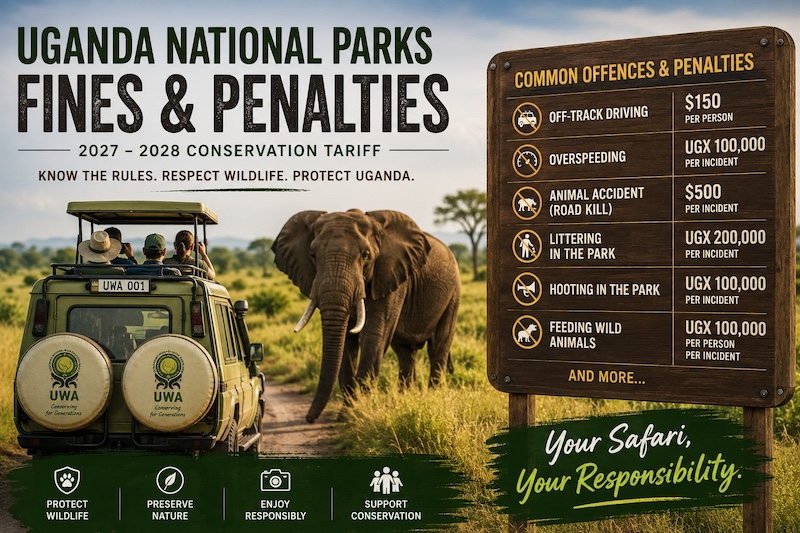
Uganda’s national parks are among Africa’s most spectacular wildlife destinations, offering unforgettable experiences such as gorilla trekking in Bwindi Impenetrable National Park, chimpanzee tracking in Kibale National Park, game drives in Queen Elizabeth and Murchison Falls National Parks, and birdwatching across the country’s protected areas.
To protect these fragile ecosystems and ensure every visitor enjoys a safe and responsible safari, the Uganda Wildlife Authority (UWA) has introduced a range of fines and penalties under the 2027–2028 Conservation Tariff. These regulations are designed to discourage activities that harm wildlife, damage habitats, or interfere with other visitors’ experiences.
Before heading out on safari, here are the important rules every visitor should know.
Why These Penalties Matter
National parks are protected conservation areas, not just tourist attractions. Every rule exists for a reason:
- Protect wildlife from unnecessary stress.
- Preserve delicate vegetation and habitats.
- Improve visitor safety.
- Support conservation efforts.
- Ensure future generations can enjoy Uganda’s wildlife.
Following park regulations helps keep Uganda one of Africa’s leading wildlife destinations.
-
Off-Track Driving – $150 Per Person
Leaving designated game drive tracks is one of the most serious offences inside Uganda’s national parks.
Although driving off-road may seem like a way to get closer to wildlife, it destroys vegetation, damages fragile ecosystems, creates soil erosion, and disturbs breeding grounds for many species.
Penalty:
- US$150 per person in the vehicle, incurred by the driver.
Always remain on marked game drive tracks unless instructed otherwise by an authorized UWA ranger.
-
Speeding Inside the Park – UGX 100,000
Wild animals frequently cross park roads without warning. Excessive speed increases the risk of collisions and endangers both wildlife and visitors.
Penalty:
- UGX 100,000 per incident
Drive slowly and obey all posted speed limits throughout the park.
-
Animal Accident (Road Kill) – $500
Wildlife has the right of way inside Uganda’s protected areas.
If careless driving results in the death or injury of an animal, the responsible driver may face a substantial penalty.
Penalty:
- US$500 per incident
Driving cautiously helps protect Uganda’s wildlife while ensuring your own safety.
-
Gorilla and Chimpanzee Permit Rescheduling
Permit allocations are carefully planned and highly limited.
Late changes create administrative challenges and may prevent other visitors from using available permits.
Late Rescheduling
Penalty:
- 25% of the permit fee
Tracking in a Different Gorilla Location
Visitors who choose to trek at a different gorilla sector from the one originally booked may incur an additional charge.
Penalty:
- 50% of the permit fee
Always confirm your trekking location before your safari begins.
-
Littering – UGX 200,000
Plastic bottles, food wrappers, cigarette butts, and other waste can seriously harm wildlife and spoil the natural beauty of Uganda’s parks.
Penalty:
- UGX 200,000 per incident
Carry all rubbish with you until you reach designated disposal points.
-
Hooting (Using Your Vehicle Horn) – UGX 100,000
Vehicle horns can frighten wildlife, interrupt natural behaviour, and reduce the quality of game viewing for other visitors.
Penalty:
- UGX 100,000 per incident
Only use your horn in genuine emergencies.
- Sitting on Top of the Vehicle – $100
Many safari vehicles have pop-up roofs designed specifically for wildlife viewing.
However, sitting or riding on top of the vehicle is extremely dangerous.
Penalty:
- US$100 per incident
Remain inside the designated viewing areas of your safari vehicle at all times.
-
Default on Tariffs – $150 Per Person
Visitors are expected to pay all required park fees before accessing activities and protected areas.
Failure to comply with park tariff requirements attracts a financial penalty.
Penalty:
- US$150 per person
Always ensure your park entrance fees and activity permits are fully paid before your visit.
-
Misusing the Equator Monument – UGX 100,000
Uganda’s famous Equator Monument is a popular stop for visitors travelling to western Uganda.
To preserve this national landmark, visitors should avoid climbing, standing, swinging, or touching protected structures.
Penalty:
- UGX 100,000 per incident
Respect the monument and follow instructions provided by site staff.
-
Feeding Wild Animals – UGX 100,000
Feeding wildlife may appear harmless, but it can have serious long-term consequences.
Human food alters natural diets, encourages dangerous behaviour, increases dependence on people, and may spread diseases.
Penalty:
- UGX 100,000 per person per incident
Enjoy observing wildlife from a safe distance without offering food.
Simple Ways to Avoid Fines
Most visitors never receive a penalty because they follow a few simple rules:
- Stay on designated roads and tracks.
- Observe park speed limits.
- Never feed wildlife.
- Dispose of all rubbish responsibly.
- Keep noise to a minimum.
- Follow your ranger or guide’s instructions.
- Respect wildlife viewing distances.
- Confirm gorilla or chimpanzee permits before travel.
- Use safari vehicles safely.
- Treat park facilities and monuments with care.
Responsible Tourism Protects Uganda’s Wildlife
The money collected through conservation tariffs and park fees supports wildlife conservation, anti-poaching operations, habitat management, ranger patrols, visitor facilities, and community conservation initiatives. By respecting park regulations, visitors contribute directly to protecting Uganda’s extraordinary biodiversity for future generations. Uganda’s protected areas are managed under conservation regulations that prioritize wildlife protection, visitor safety, and sustainable tourism.
Whether you’re trekking mountain gorillas in Bwindi, tracking chimpanzees in Kibale, or enjoying a game drive in Queen Elizabeth or Murchison Falls National Park, following these rules will help ensure a safe, enjoyable, and environmentally responsible safari. Respect the parks, follow your guide’s instructions, and leave only footprints as you experience the incredible wildlife that makes Uganda the Pearl of Africa.