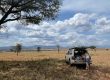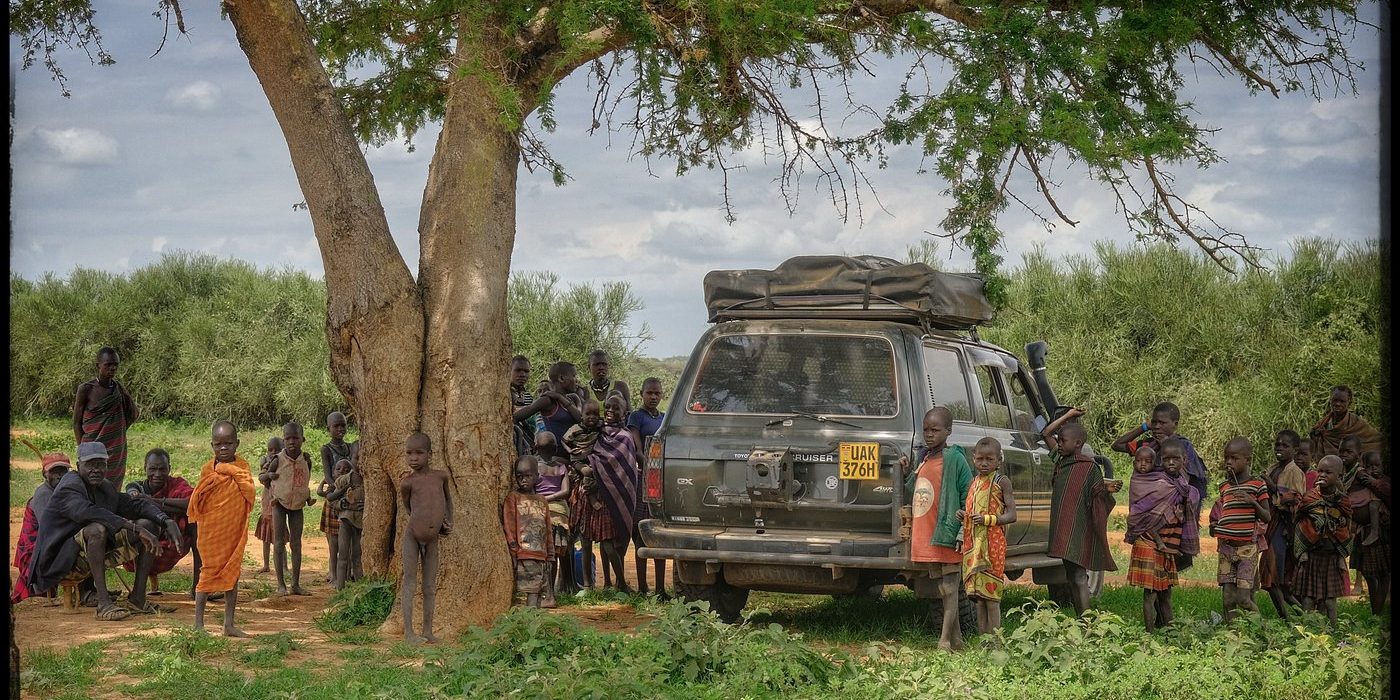
If you want to experience the real Africa and see wild animals in their natural habitat, often from just five to ten meters away—and without spending a fortune—then consider Uganda. It is one of the most affordable countries for organizing a safari. Uganda’s landscapes are incredibly diverse, ranging from savannahs to dense forests and high mountains. This variety of terrain supports an equally rich variety of wildlife: giraffes, hippos, many types of primates, including gorillas, as well as numerous antelope species. On top of that, Uganda is home to an impressive array of birds and the famous “Big Five”: elephants, lions, leopards, buffaloes, and rhinos. Compared to the more popular destinations like Kenya and Tanzania, Uganda remains wilder and less crowded—literally teeming with animals.
Traveling independently in Uganda can be significantly cheaper than booking a packaged safari. With careful planning, it is possible to arrange everything yourself: visas, car rental, routes, accommodation, and park visits. This guide walks through each step of the process.
Uganda is in East Africa, bordered by five countries: South Sudan, Kenya, the Democratic Republic of the Congo, Rwanda, and Tanzania. Much of its southern region is framed by the massive Lake Victoria. The capital, Kampala, is a bustling city of about 1.5 million people. However, Uganda’s main international airport lies 30 kilometers south of the capital in the smaller town of Entebbe (population about 70,000). If sightseeing in Kampala is not on the itinerary, it is possible to skip the capital entirely and start the trip directly from Entebbe.
Car Rental
Where to rent a car. Car rental in Uganda (like much else in Africa) comes with its own nuances. The process is not as streamlined as in Europe, since online platforms are still limited. To book, simply type “Rent a car Entebbe” or “Rent a car Kampala” in Google Maps, collect contacts, and reach out via WhatsApp to inquire about availability, dates, and car options. Compare responses, then negotiate with the most reliable company.
One option is Car Rental in Uganda. The pick-up and drop-off process is simple, and it is advisable to photograph the car from all sides before departure.
Which car to choose? Generally, there are three categories:
- Budget: Toyota RAV4 for $45–55
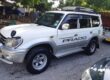
- Mid-range: Toyota Land Cruiser Prado for $65–75,
- Premium: Car with rooftop tent for $85–100, Land Cruiser V8 $95, Land Cruiser LX and J70 Series for 120$ to 200$
Hiring a car with a driver in Uganda costs an extra $35–50 per day. The driver follows your schedule and usually sleeps in the vehicle.
A RAV4 may seem cheaper, but its short wheelbase makes long drives on rough roads uncomfortable. A Prado provides better comfort and reliability, especially over long distances and in tricky situations where a smaller SUV might struggle.
A Prado with a rooftop tent is only worthwhile if camping extensively in remote areas. Otherwise, lodges will still be necessary.
Negotiating prices. Initial rental quotes are usually inflated. A Prado may be quoted at $70–100 per day, but after bargaining with several offices, $65 is a fair rate. RAV4s typically start at $60–70 but can be negotiated down to $45–50.
Most agencies ask for a deposit of $100 or up to half the rental fee. With a foreign bank card, this can be paid in advance, but it is safer to insist on reserving without prepayment.
Rental days. Be aware that Uganda counts rental days differently. Both the pick-up and drop-off days may be charged as full days. Negotiation is possible to pay only for the actual number of days used.
Licenses. An international driver’s license is not required—your standard plastic license is enough.
Left-hand driving. Uganda drives on the left. With an automatic car, adjusting usually takes only a short time.
Roads. Highways between cities are paved and in good condition. Roads in national parks or off the main routes can be rough dirt tracks, often limiting speeds to 20–30 km/h. Even a good 4×4 has its limits, and it is possible to get stuck in deep clay during rains.
Plan no more than 400 kilometers of driving per day—it usually takes 8–9 hours with stops. Aim to arrive at overnight stays before dark (around 7:00 PM in July).
Rules and fines. Road rules are similar to Europe. Police checkpoints are frequent but usually friendly. Speed cameras exist, but tolerances up to 20 km/h over the limit are generally ignored. On highways, speeds of 80–90 km/h are typical.
Inside parks, the speed limit is 40 km/h. Exceeding it can result in fines, though rangers are usually polite.
Fuel. Over eight days, expect to drive about 1,900 km (1,200 on highways, 700 inside parks), using around 200 liters of diesel. Diesel costs about $1.40 per liter, gasoline $1.50, and up to $2.00 inside parks. Keeping the tank at least one-third full is strongly advised, as stretches of 200 km may lack fuel stations. Small local pumps can help in emergencies.
Apps
In Africa, certain apps are especially useful:
- Google Maps – Surprisingly effective, even showing minor dirt roads. However, sometimes it suggests poor routes. Always check in satellite view. Inside national parks, Google Maps is excellent.
- Maps.me – A good offline backup.
- iOverlander – Helpful for finding camping sites.
- Google Translate – English is the main language, so this is rarely needed.
- WhatsApp – The universal app for communication. Everyone is on it.
For mobile internet, local SIM cards are commonly used, but eSIM apps like Yesim work well. Signal can be weak inside parks, but overall coverage is decent.
Route
The best safari routes usually form a loop, with a clockwise direction preferred. Entebbe is the starting point since international flights land there. From the airport, car rentals are located nearby.
A clockwise loop offers the advantage of reaching Queen Elizabeth National Park first and Ziwa Rhino Sanctuary at the end, close to Entebbe. This order is also more logical for balancing distances and sights.
Suggested Itinerary
Day 1. Arrival
Flight arrival in Entebbe, car rental, and hotel check-in. Shopping at Victoria Mall—modern and comfortable with ATMs and good food options. Overnight at Tilapia Lodge (budget, $35, rooms and breakfast included, with great reviews and a lakeside location).
Day 2. Mabamba Swamp
Morning visit to Mabamba Swamp (30 km). The road is narrow, muddy in spots, and passes through lively villages. A boat trip costs $35 per person for two hours, with high chances of seeing the shoebill stork.
Afternoon drive to Queen Elizabeth National Park (400 km, about 8 hours). Stop at the equator line for photos. Overnight at Twin Lakes Safari Lodge ($60, clean, great views, friendly staff).
Day 3. Queen Elizabeth National Park – Ishasha Sector
Morning safari in Ishasha, famous for tree-climbing lions. Entry fee $40 per person. The road is bumpy, but the chance of seeing lions resting on tree branches is worth it.
Overnight inside the park at Enjojo Lodge ($80 for a family tent with four beds). The lodge is eco-friendly, with solar power, open showers, and meals cooked by the owner.
Day 4. Queen Elizabeth National Park – Mweya Sector
Morning game drive with sightings of buffalo, antelopes, and elephants. Boat safari at Kazinga Channel ($35 per person) to see hippos, crocodiles, and hundreds of birds.
Overnight at the same lodge.
Day 5. Transfer to Murchison Falls National Park
Long drive (450 km, 9 hours). Stop for lunch in Fort Portal, with views of crater lakes and banana plantations. Optional visit to Amabere Caves. Overnight at Hornbill Bush Lodge ($40, basic but cozy, with great views and campfire dinners).
Day 6. Murchison Falls National Park
Morning safari: giraffes, elephants, buffaloes, antelopes, and possibly lions. Ferry crossing ($5 per vehicle). Afternoon at Murchison Falls, where the Nile squeezes through a narrow gorge. A boat trip to the base of the falls costs $30 per person. Overnight at Sambiya River Lodge ($300, luxury, spacious cottages, excellent meals).
Day 7. Budongo Forest and Optional Activities
Morning chimpanzee trek in Budongo Forest ($90 per person, 3–4 hours). Optional stop at the Ziwa Rhino Sanctuary or adventure activities like ziplining near Sambiya.
Overnight at Sambiya River Lodge.
Day 8. Return to Entebbe
Early visit to Murchison Falls top viewpoint. Drive 300 km to Ziwa Rhino Sanctuary. Walking safari with rhinos ($50 per person). Continue to Entebbe for departure.
Overnight Stays
Accommodation in Uganda ranges from budget campsites to luxury lodges. Booking platforms like Booking.com or Airbnb are available, but not every lodge is listed online. In remote areas, lodges can usually be reserved directly via WhatsApp.
- Budget: $25–35 per night. Basic rooms or camping. Examples: Tilapia Lodge near Entebbe or Hornbill Bush Lodge near Murchison Falls.
- Mid-range: $60–90 per night. Comfortable lodges with hot water, electricity, and meals. Twin Lakes Safari Lodge is a good example.
- High-end: $300+ per night. Luxury lodges like Sambiya River Lodge offer large cottages, swimming pools, and fine dining.
It’s common to combine different levels—budget for short stays, mid-range near parks, and a splurge at a luxury lodge for comfort.
Safety
Uganda is relatively safe for travelers. Locals are welcoming and helpful, and tourism is well supported. Police checkpoints are frequent but generally hassle-free. Officers often just wave cars through after a quick look.
The biggest risks are related to driving: poor road conditions, animals crossing, and fatigue on long routes. It’s important to avoid night driving, keep valuables out of sight, and always lock the car.
National parks are safe when rules are followed. Visitors must remain in vehicles during game drives and obey ranger instructions.
What to Pack
- Clothing: Lightweight clothes for daytime, a warm jacket for mornings and evenings, and a raincoat.
- Footwear: Comfortable walking shoes and sandals.
- Gear: Binoculars, a camera with zoom, and a flashlight.
- Essentials: Sunscreen, insect repellent, and a reusable water bottle.
- Documents: Passport, driving license, and copies of bookings.
Lodges often provide mosquito nets, but bringing personal repellent is still essential.
Money
The local currency is the Ugandan shilling (UGX). Cash is used everywhere outside major cities, and credit cards are accepted only in some hotels. ATMs are available in towns, though not in remote areas or national parks.
For daily expenses like fuel, food, and park fees, carrying local cash is essential. Exchange rates are best in Kampala or Entebbe. Small bills are useful for tips, snacks, or roadside purchases.
Visa
A tourist visa is required for most visitors. The simplest option is to apply online for the Ugandan eVisa. The cost is $50 for a single entry, valid for 90 days.
Another option is the East Africa Tourist Visa ($100), valid for Uganda, Kenya, and Rwanda. Applications are processed online, and approval usually takes a few days.
It’s important to print the confirmation to present upon arrival.
Travel Budget
Uganda is more affordable than many African safari destinations. An 8-day self-drive safari typically includes:
- Car rental: $480–560
- Fuel: $300
- Accommodation: $350–700 (depending on choices)
- Park fees and activities: $300–500
- Food and extras: $200–300
Total: $1,600–2,300 for two travelers.
By comparison, guided safaris in neighboring countries often cost double. Uganda allows independent travelers to explore at their own pace while keeping costs manageable.
Best Time to Visit
Uganda can be visited year-round. The best time for Uganda safari tours is the dry season, from June to September and December to February. Roads are easier to navigate, and animals gather around water sources, making them easier to spot.
The wet seasons, from March to May and October to November, bring heavier rains, but landscapes are greener and lodges often offer discounts.
Uganda offers travelers a rare mix of adventure and accessibility. With careful planning, a self-drive safari provides unforgettable wildlife encounters, diverse landscapes, and warm hospitality at a fraction of the cost of safaris in neighboring countries.